There are a lot of great stories about people buying their first watch to mark a monumental moment in their life or careers- a promotion, a milestone birthday, a signal that you’ve made it.
I bought my first vintage watch, not to mark a special occasion but to serve as a daily reminder that time, my time, is valuable and I needed to start paying attention to it.

In On the Shortness of Life, Seneca says something that’s stayed with me for years, “It is not that we have a short time to live, but that we waste a lot of it.” He urges us to be as careful with our time as we are with our money. And yet, so many of us are misers with our money and throw away our time like it’s cheap when really it’s all we got.
I wear a watch to notice my time, pay attention to it, and do my best not to squander it. It doesn’t hurt that it also instantly elevates an otherwise simple outfit.
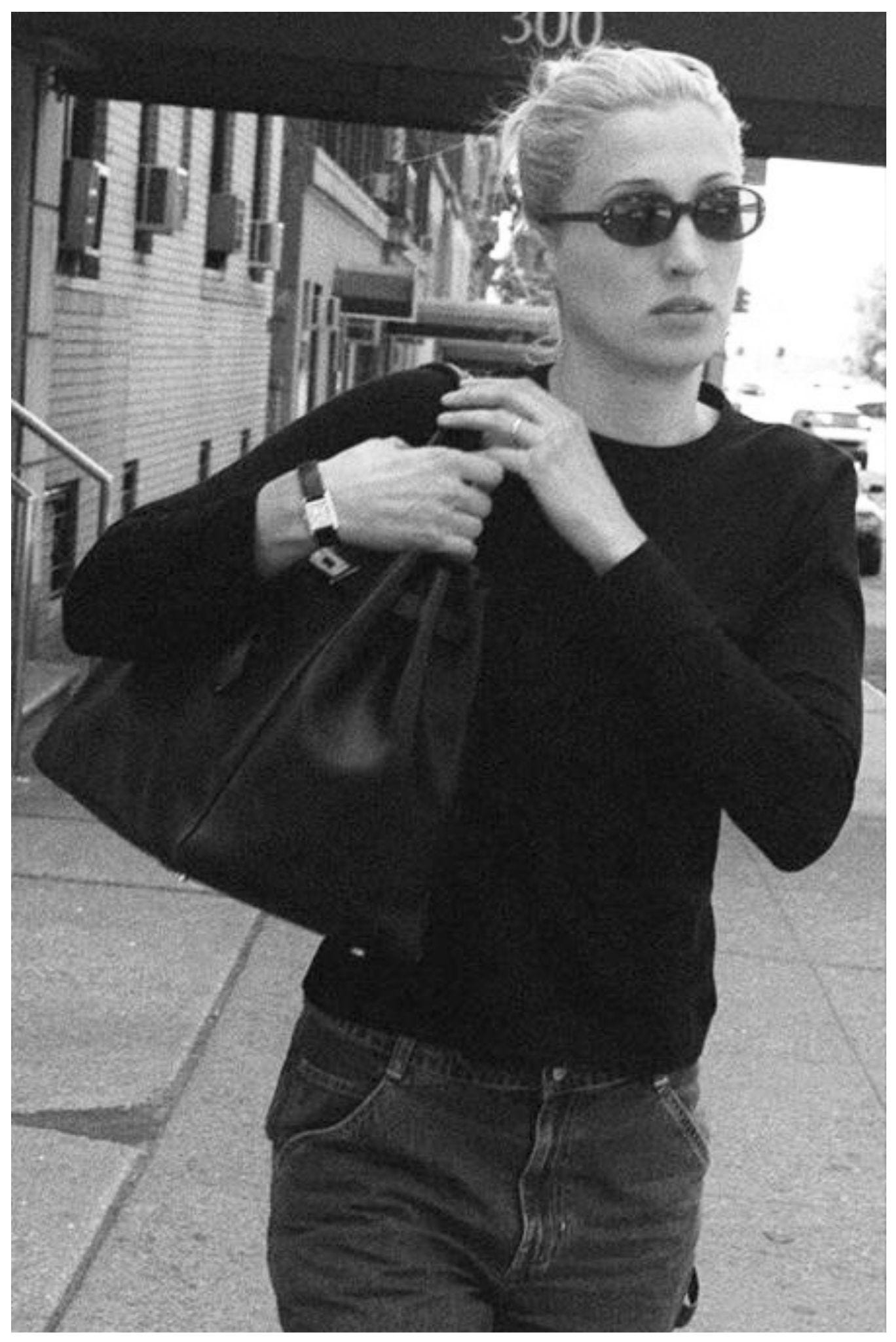
A great vintage watch can be a very expensive talisman (like the Cartier Tanks Carolyn and Jackie wore) but it doesn’t have to be. A couple weeks ago I went to the last Long Beach Flea of the year. The vintage gods were looking down on me because not only did I find the thing I was looking for (a big gorgeous vintage rug for my kitchen) but I left with an unexpected treasure- a vintage Seiko dress watch.
I noticed this booth with a small table that had nothing but little ladies watches, which I rarely see at most fleas. In the midst of all these sweet, somewhat flashy vintage women’s watches, was this perfect little Seiko watch.
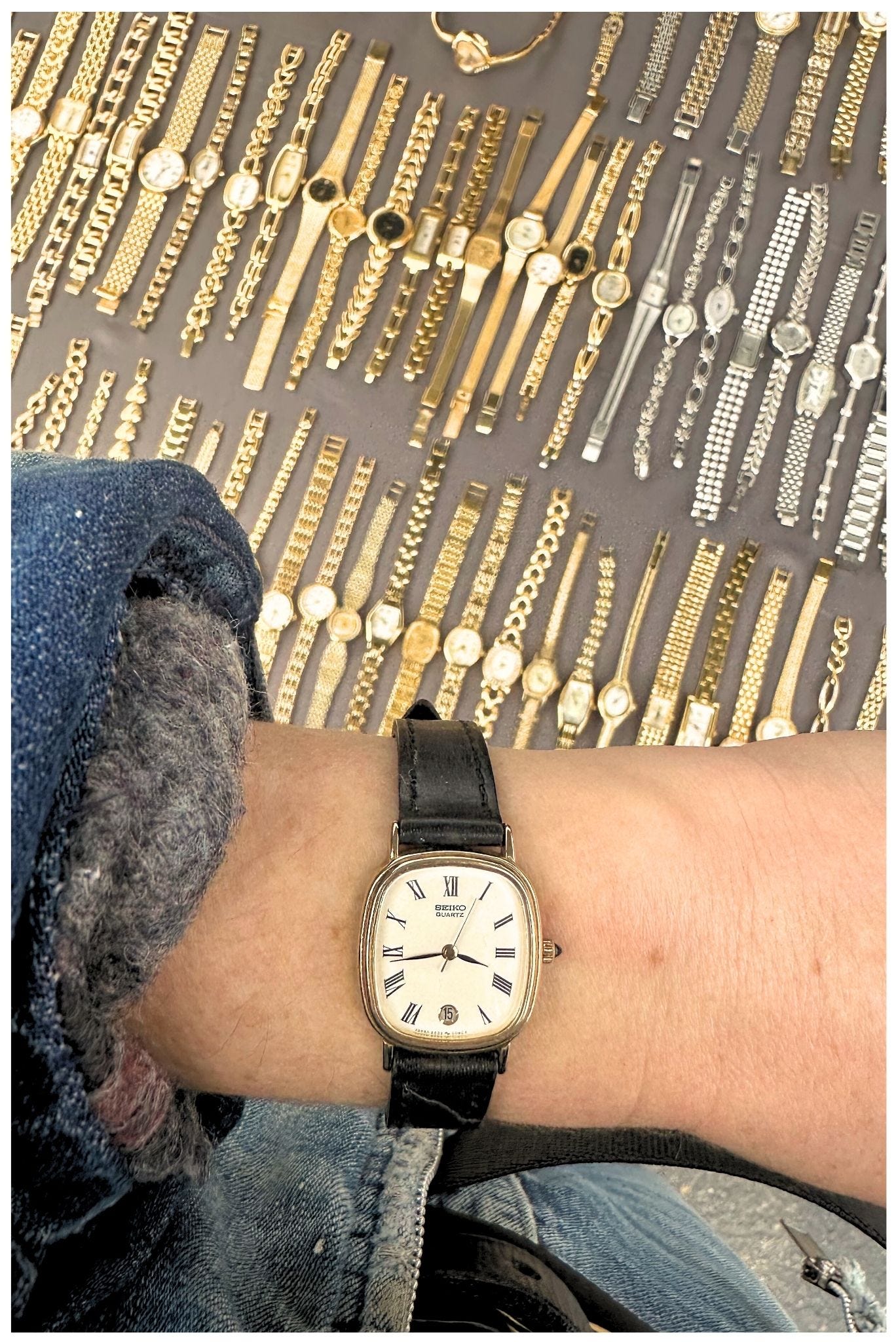
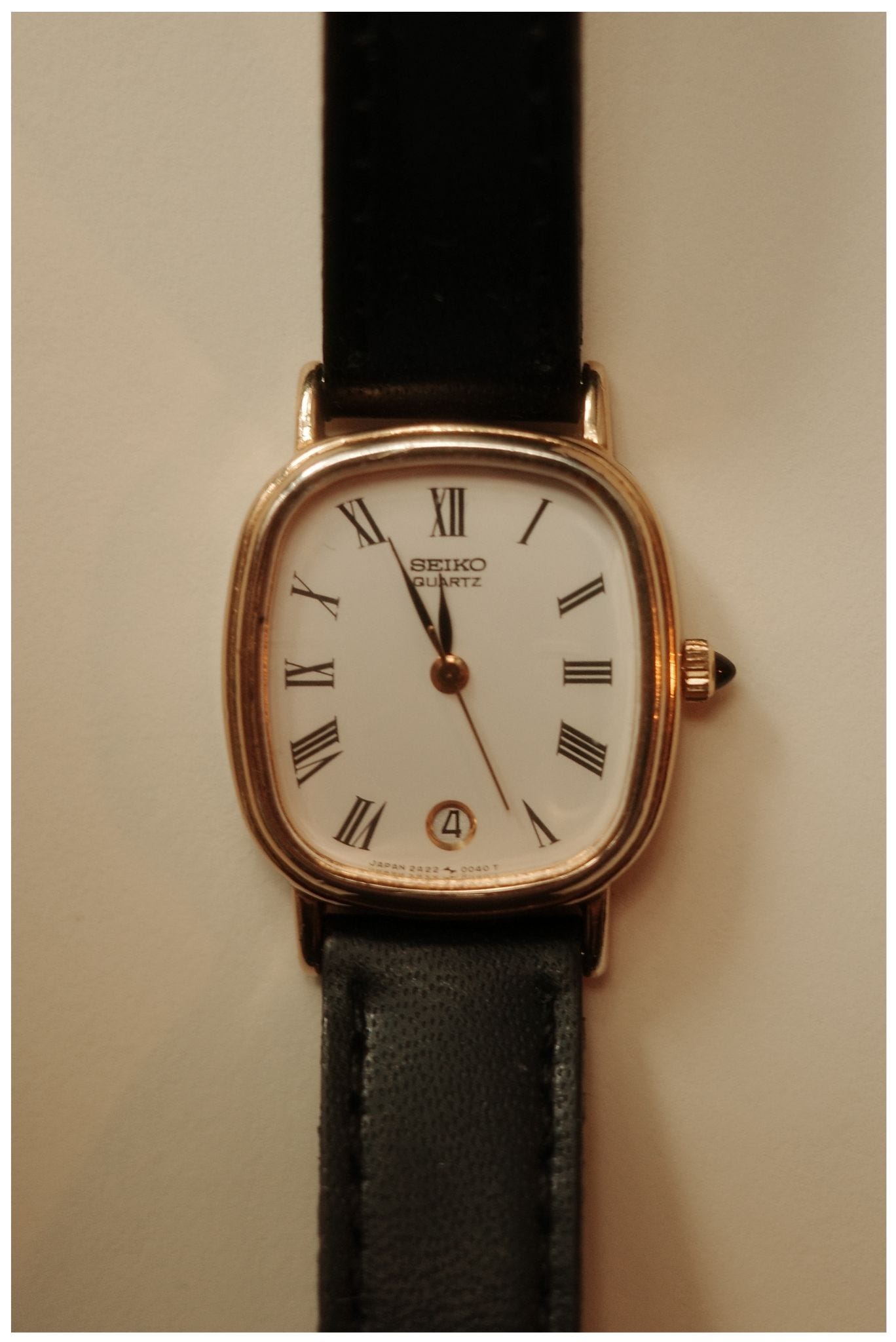
I loved the simple gold case, gorgeous parchment dial with roman numerals and a tiny little date window at the 6 position. It was small, slim, chic, and unlike anything else I have. Something that could be a daily driver without feeling precious or bulky.
Seiko watches might be one of the best kept secrets there is when it comes to finding a beautifully made vintage watch with enduring designs, legacy craftsmanship, and incredibly affordable price points.
Whether you’re new to watches or already have a collection, a vintage Seiko makes an excellent first watch or a thoughtful, low-pressure addition to what you already own.
Today I’m sharing a complete guide to buying a vintage Seiko- what to look for and how to find one you’ll love. Plus an edit of my favorite vintage Seiko finds at the end.
About the Brand
Seiko was founded in Tokyo in 1881 by Kintaro Hattori, who began his business selling and repairing watches. Ten years later, he built his own factory. An early sign of Seiko’s commitment to doing things differently and doing them well.
Seiko is among a very small group of watchmakers, including Rolex and Patek Philippe, that manufacture all of their components in house from movements and dials to cases and hairsprings. This gives Seiko complete control over quality, precision, and design.
In 1969, Seiko reshaped the entire industry by introducing the world’s first quartz watch, an innovation that democratized access to accurate watches.
What makes vintage Seiko so compelling is that these watches were designed with the same craftsmanship and precision as their Swiss counterparts but with the everyday wearer in mind. These watches were not meant to be objects of status, they were meant to be tools. Seiko watches were designed to be worn daily, used hard, and lived in- all without sacrificing design, which is exactly why I love them.
Details to Consider
The beauty of a great watch is all in the details. The details are what give every watch a very specific personality. Here are some things to consider:
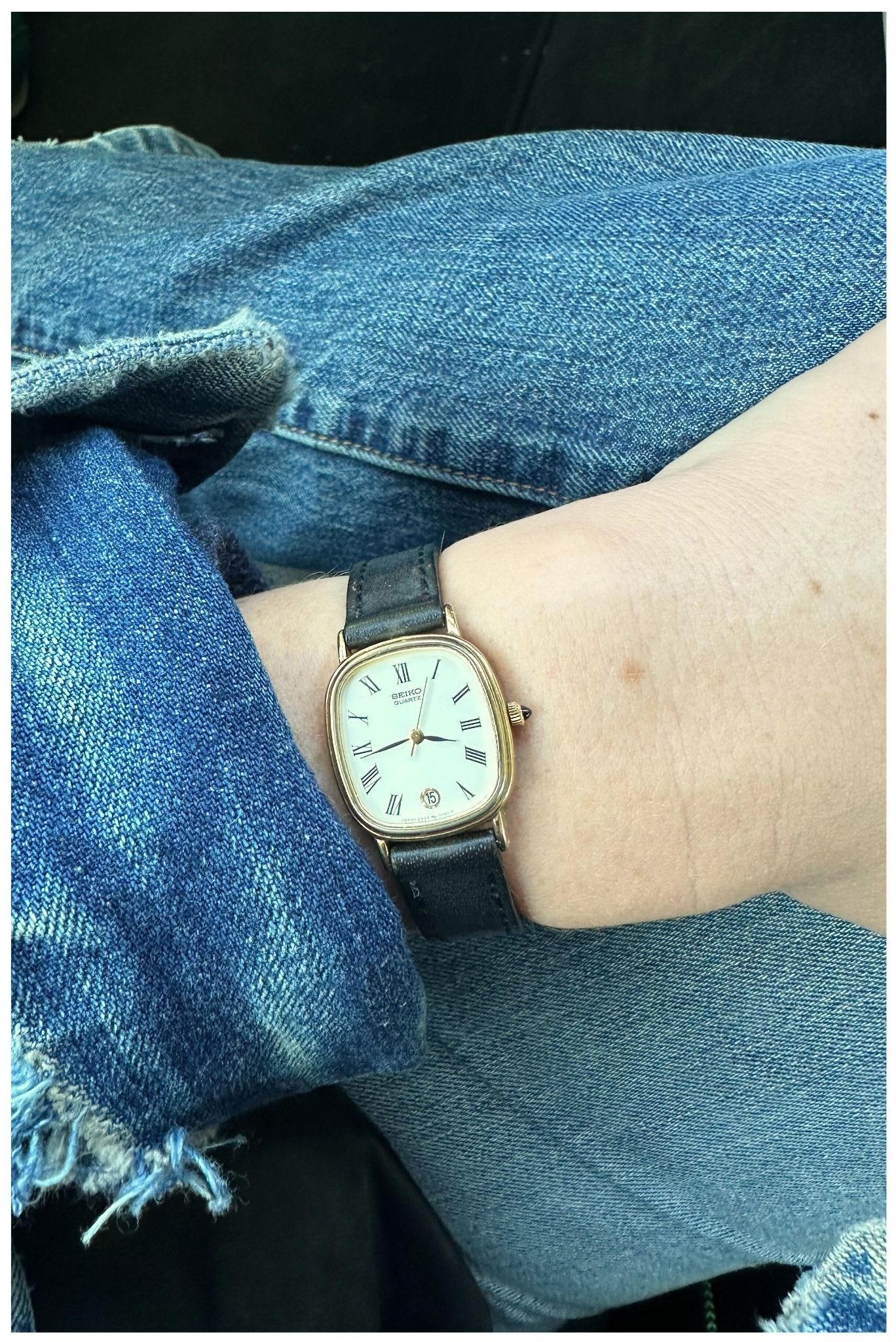
Case
What drew me to the Seiko I picked up was the size and shape of the case. I liked the rectangular shape with rounded edges which felt unique. The proportions are elegant and restrained- slim case, low profile, and intentionally small without feeling dainty. My seiko watch is 20-22 mm size with a 12mm lug. I like that it can just disappear under any sleeve. Watch size visual here.
Material
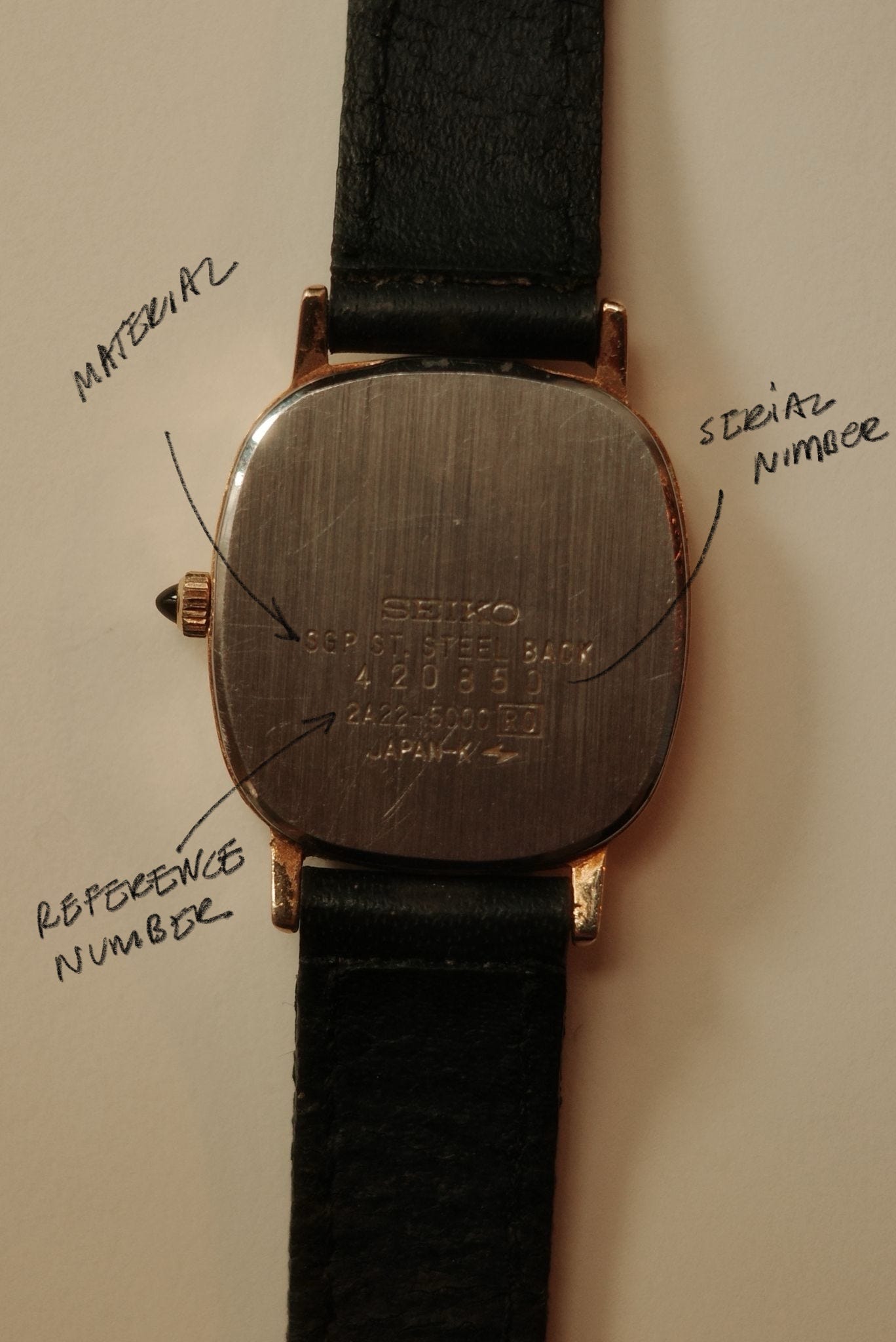
SGP St. Steel Back is stamped on the back of the watch. “SPG” stands for Seiko Gold Plated. Most vintage seiko gold tone watches are gold-plated rather than solid gold, which helps keep prices reasonable. Stainless steel is extremely durable and like anything gold plated- you can easily bring the watch into a jeweler to get re-plated. What matters most is overall condition rather than material alone.
Dial
Cream, parchment, champagne, and soft silver dials age particularly well and look the most timeless. Some patina is not a flaw, but adds to the character. The simple round day date window at 6 is a perfectly placed bonus.
Font
Roman numerals, slim batons, delicate serif fonts are little details that give a lot of personality to a watch. My watch has simple roman numerals without minute indicators which makes the dial feel clean, chic, and timeless.
Hands
I love the articulated slim black hands that contrast against the light dial, anchored by a delicate gold second hand.
Crown
An onyx cabochon crown adds a subtle jewelry detail, while the overall design feels balanced, thoughtful, and quietly chic.
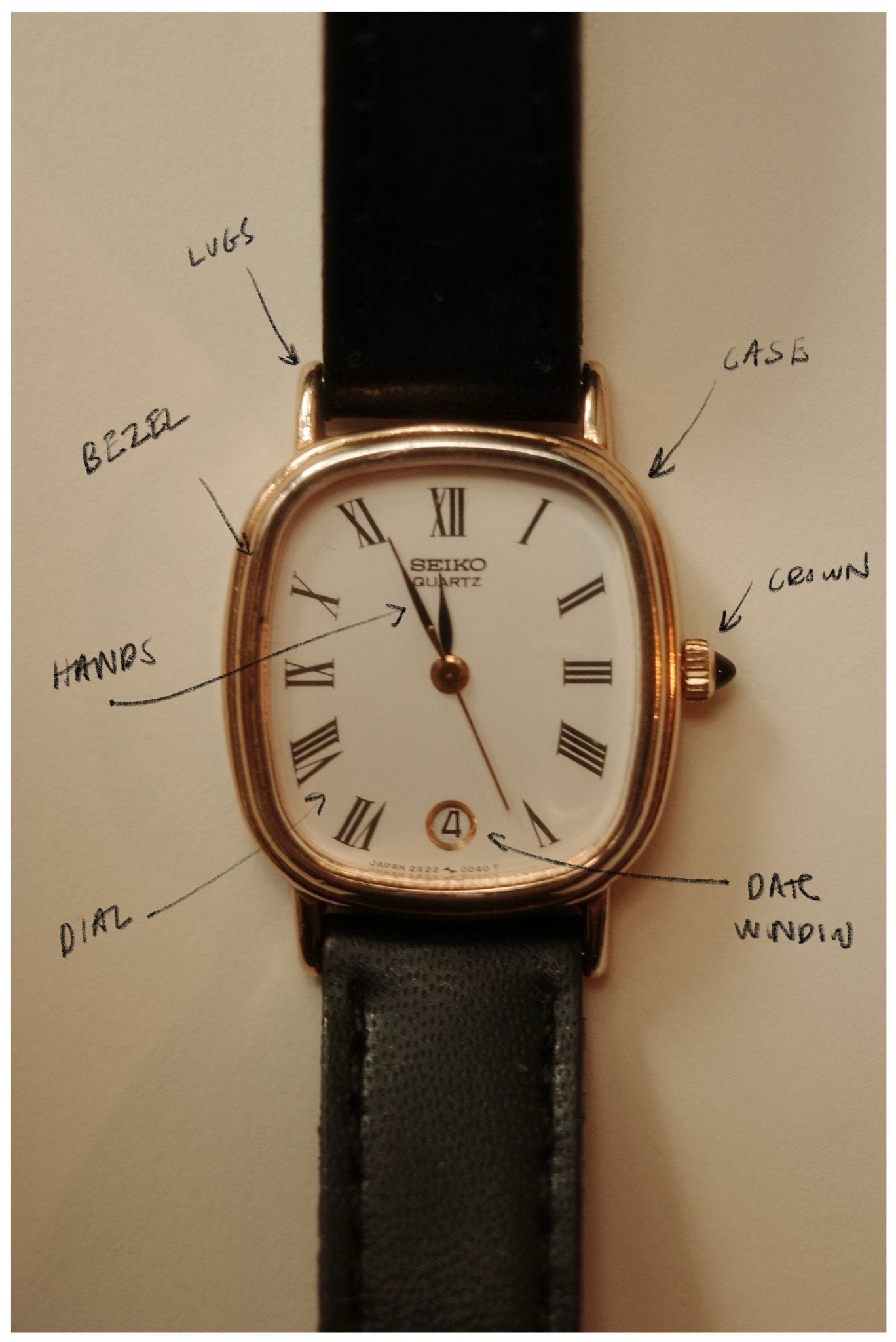
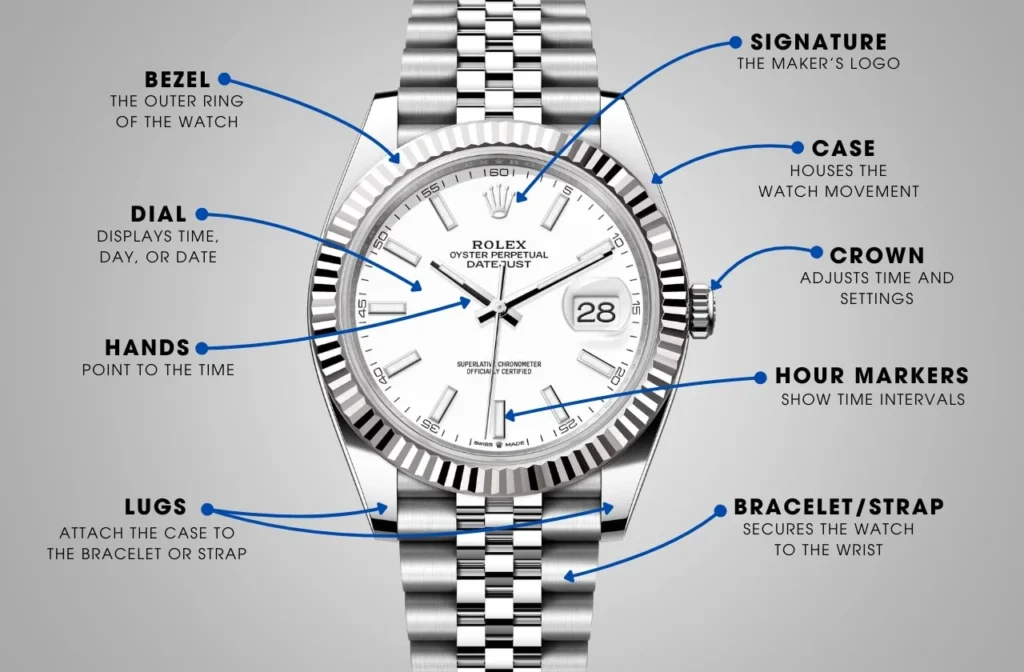
Anatomy of a watch here.
Condition
Keep your eyes peeled for damaged, chipped, or tarnished cases. Look for clean hands and legible dials. Some dials will show some patina- I don’t mind this, it shows character. Light scratches are not ideal but can be buffed out by a jeweler.
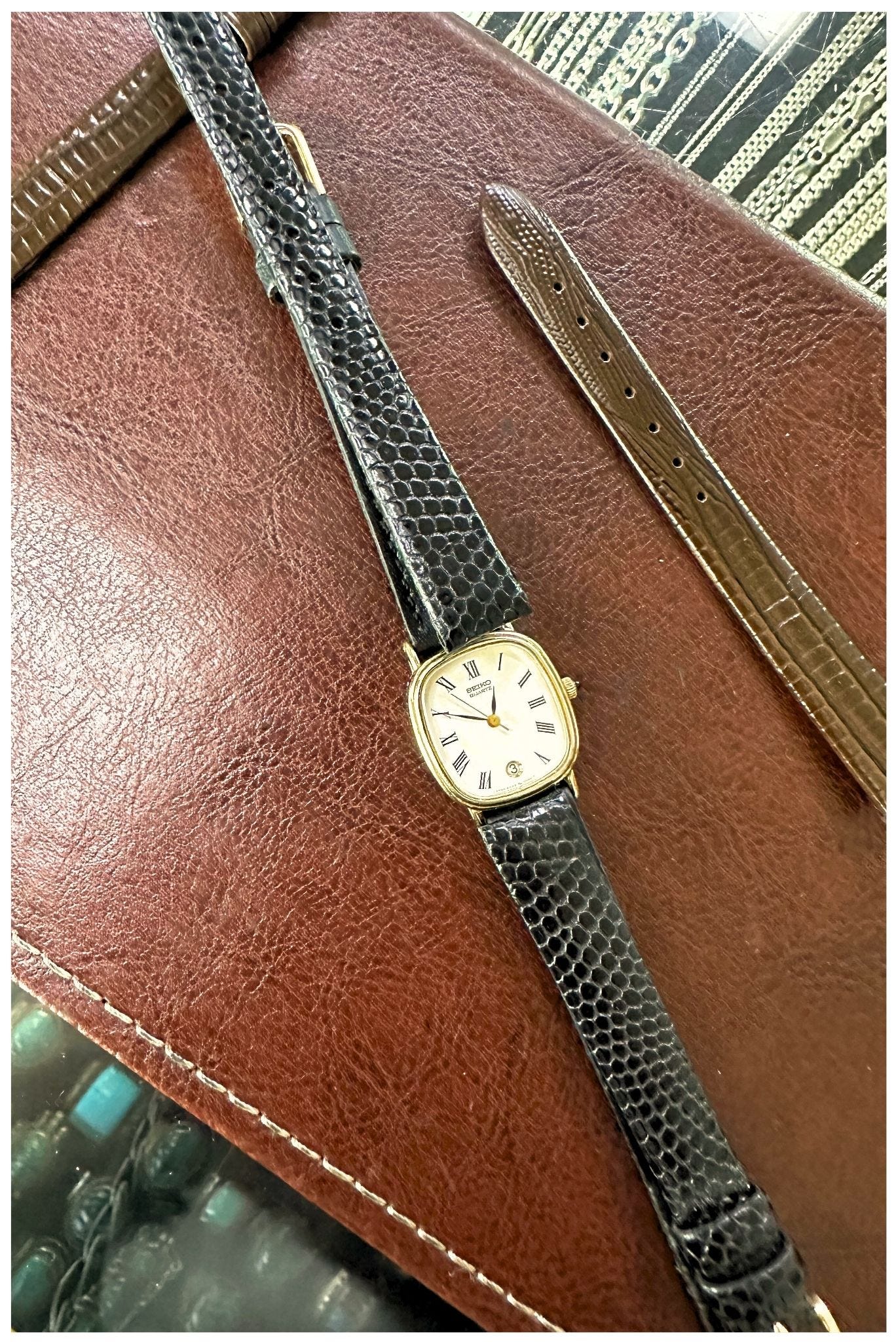
Some listings will show watches that are in impeccable condition with straps that have really gone through the ringer or in a color that you don’t love. A strap is easily replaceable and an easy way to make a vintage watch feel fresh and personal. I’m updating my watch with a black lizard strap to make it feel a bit dressier.
The Seiko Reference Number
The reference number tells you about the make and model of a watch. The great thing about the Seiko is the reference number is stamped on the back of the case (often times you have to open a watch up to find the reference number). Mine is ref number 2A22 5000.
First Four Digits (Movement Code): Identifies the movement caliber and its features (e.g., day/date). The Seiko 2A22 is a movement that was developed in the 80s mostly for women’s dive watches and dress watches with a date function.
Last Four Digits (Case Code): Describes the specific case design, materials, and sometimes production era (e.g., 0020 for a classic diver case).
The Seiko Serial Number
The serial number is the unique code every Seiko watch has that tells you the year and month the watch was made, as well as the production number the watch was for the month. This number is also stamped on the back on the watch case for easy reference.
First Digit (Year): Indicates the year within the decade (e.g., 1 for 1971 or 1981).
Second Digit (Month):
1-9: January to September
0: October
N: November
D: December
Remaining Digits (Production number): The final digits are a sequential production number for that month/year.
Example:
Serial Number: 420850
Year: 4
Month: 2
Production: 850
My watch was made in February 1984 (assuming it’s from the 80s, could be 90s) and the 850th watch in the production line. Some watch geeks use serial numbers to seek out watches made in their birthday month and year.
The Edit
This edit is a round up of the most beautiful vintage Seiko dress watches I could find on the internet for paid subscribers. Some are under $100 none are over $325. All can be worn as daily driver and a quiet reminder that your time is valuable.
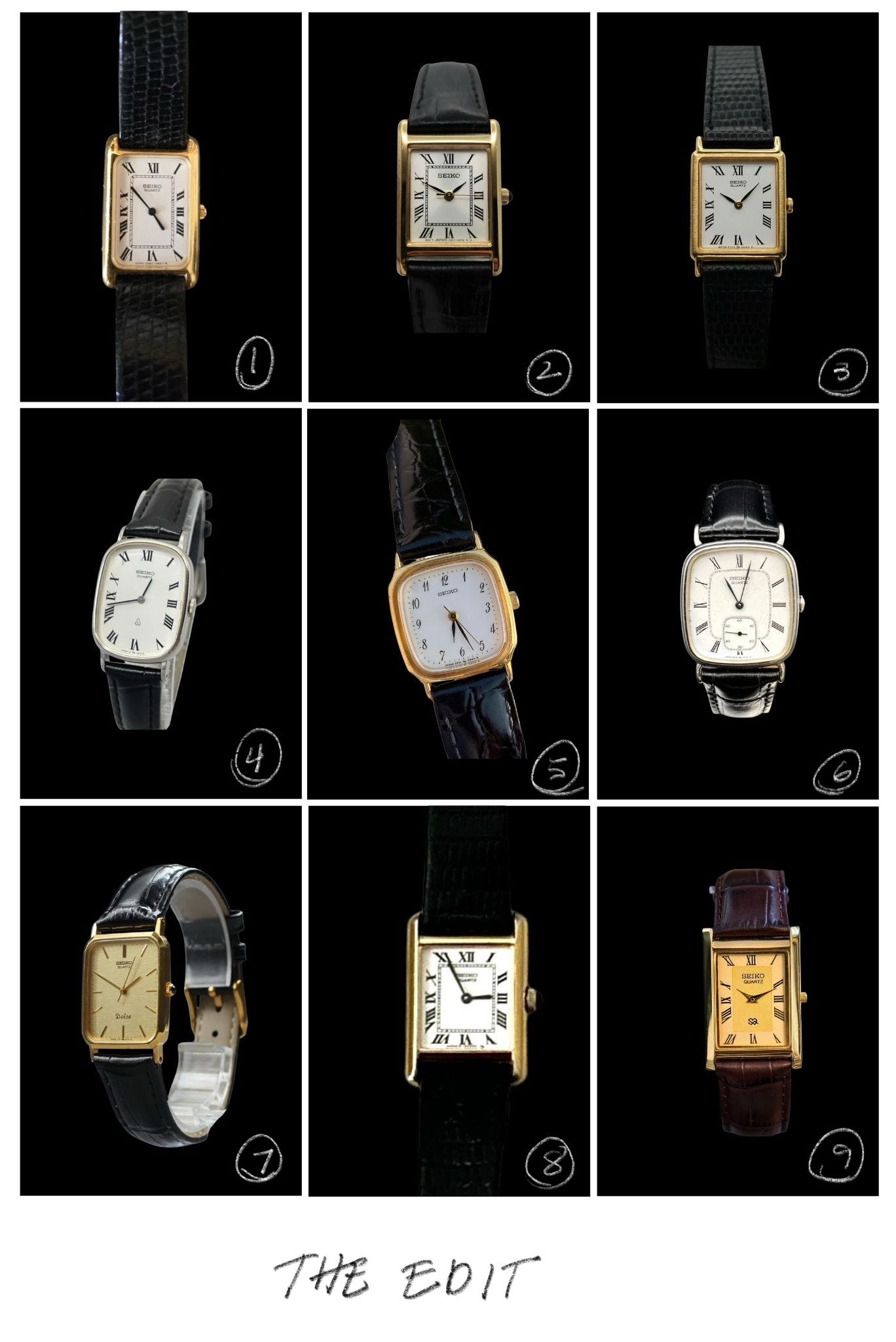
No 1. Vintage Seiko Watch, $300